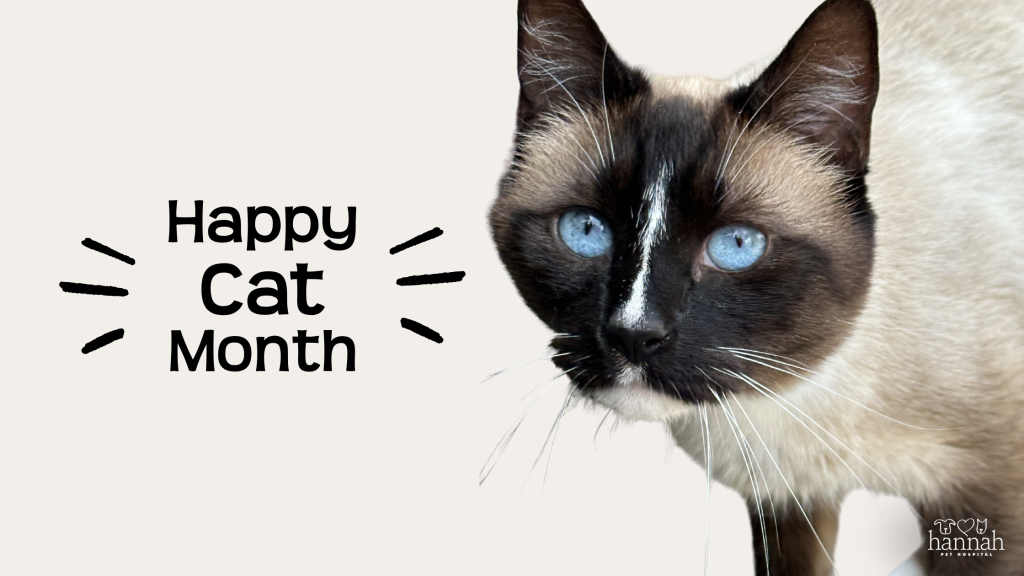
September is Happy Cat Month, and what better way to celebrate than by giving our feline friends a little extra love and attention?
From their playful personalities and curious habits to their love of cozy naps, cats have a special way of becoming part of the family. As Pet Parents, we want to give them the best possible care so they can enjoy many happy, healthy years by our side.
At Hannah Pet Hospital, we believe preventive veterinary care, proper nutrition, and understanding your Pet’s individual needs are essential to supporting their overall well-being.
In honor of Happy Cat Month, we’re sharing nine ways to help your cat live a longer, healthier, happier life.
1. Make Regular Veterinary Visits a Priority
Cats are surprisingly good at hiding discomfort, which means health concerns aren’t always easy to recognize.
Routine wellness exams give your veterinary Team the opportunity to monitor your cat’s weight, dental health, mobility, and overall condition while identifying potential health concerns.
According to the ASPCA’s General Cat Care guide, cats should receive a veterinary examination at least once a year. Senior cats and those with ongoing health conditions may benefit from more frequent appointments based on their individual needs.
Even if your cat appears perfectly healthy, staying consistent with veterinary visits is an important part of preventive care.
2. Provide a Balanced and Nutritious Diet
Your cat’s nutritional needs change throughout their life, from their energetic kitten years to their quieter senior days.
Providing a complete and balanced diet appropriate for their age, weight, activity level, and health can help support their overall well-being.
Portion control is also important. Maintaining a healthy weight can help reduce the risk of health conditions associated with feline obesity.
As explained by Cornell University’s Feline Health Center, obesity is a common nutrition-related concern for cats and can increase their risk of conditions such as diabetes and arthritis.
If you’re unsure whether your cat is receiving the right nutrition, ask your veterinary Team about their individual dietary needs.
3. Keep Your Cat Hydrated
Does your cat prefer drinking from the kitchen faucet instead of their water bowl? You’re not alone!
Some cats can be particular about their drinking habits. Fortunately, there are simple ways to encourage adequate water intake.
According to Cornell University’s Feline Health Center, keeping fresh water readily available, offering water fountains, and incorporating wet food can help support healthy hydration.
Try placing multiple water bowls throughout your home and experimenting with different drinking options.
Pay attention to noticeable changes in how much water your cat drinks, as these can sometimes signal an underlying health concern.
4. Make Time for Daily Play
Whether your kitty enjoys chasing feather toys, pouncing on stuffed mice, or sprinting through the house at midnight, regular playtime is important!
Play encourages physical activity, provides mental stimulation, and allows cats to express their natural hunting instincts.
According to the ASPCA’s Feline DIY Enrichment guide, enrichment activities help keep cats mentally stimulated and encourage natural behaviors. Interactive toys, food puzzles, and opportunities to explore can all contribute to a stimulating environment.
Try rotating toys, introducing puzzle feeders, or scheduling short interactive play sessions throughout the day.
A little playtime can go a long way toward keeping your kitty active and entertained.
5. Don’t Forget About Dental Health
Your cat’s dental health is just as important as the rest of their physical health.
Unfortunately, dental disease is common in cats and can cause significant discomfort.
According to Cornell University’s Feline Health Center, studies have found that between 50% and 90% of cats older than four years experience some form of dental disease. Many common dental conditions can be prevented or treated with appropriate care.
Watch for signs such as bad breath, drooling, difficulty chewing, or changes in eating habits.
Regular dental evaluations, professional cleanings when recommended, and appropriate at-home dental care can help maintain your cat’s oral health.
6. Create a Cat-Friendly Environment
A happy cat needs more than a comfortable bed and a full food bowl.
Cats naturally enjoy exploring, climbing, scratching, observing their surroundings, and finding quiet places to relax.
The ASPCA’s Feline DIY Enrichment guide explains how environmental enrichment can help create a stimulating home that supports your cat’s natural behaviors.
Make your home more enriching by providing scratching posts, cat trees, window perches, interactive toys, and comfortable hiding spots.
For households with multiple cats, provide enough food bowls, water sources, litter boxes, and resting spaces to help reduce competition and stress.
And remember, sometimes an empty cardboard box is all it takes to make your cat’s day!
7. Stay on Top of Preventive Care
Preventive care is one of the most important ways to support your cat’s long-term health.
Keeping vaccinations current, maintaining appropriate parasite prevention, and discussing recommended health screenings with your veterinarian can help protect your kitty throughout their life.
According to the ASPCA’s General Cat Care guide, vaccination recommendations should be based on your cat’s age and health, with guidance from your veterinarian. Regular examinations are also an important part of maintaining your cat’s well-being.
And don’t forget about indoor cats! Even cats that never venture outside may face certain health risks.
Your veterinarian can help determine which vaccinations, preventive treatments, and screenings are appropriate for your cat.
8. Pay Attention to Changes in Behavior
Nobody knows your cat quite like you do!
Changes in your cat’s appetite, water intake, litter box habits, grooming, or energy levels may be early indicators of an underlying health concern.
For example, an affectionate cat who suddenly begins hiding or a normally playful kitty who becomes unusually quiet may be experiencing discomfort.
Cornell University’s Feline Health Center explains that behavioral or physical changes, especially in older cats, shouldn’t automatically be dismissed as normal aging. Such changes may indicate an underlying medical condition that requires veterinary attention.
Don’t assume changes in behavior are simply part of getting older. If something seems unusual, reach out to your veterinary Team.
If your cat is having trouble breathing or straining to urinate without producing urine, seek emergency veterinary care immediately.
9. Give Them Plenty of Love and Attention
Every cat expresses affection differently. Some love curling up in your lap, while others prefer showing their love from across the room.
Understanding your cat’s personality, respecting their boundaries, and providing positive interactions can help strengthen your relationship.
The ASPCA’s General Cat Care guide offers helpful information about creating a comfortable home environment, providing appropriate handling, and meeting your cat’s everyday needs.
Spend time doing activities your cat enjoys, whether that’s playing with toys, brushing their coat, cuddling, or simply relaxing together.
Creating a consistent routine and providing a comfortable environment can also help your cat feel safe and secure.
After all, a happy cat isn’t necessarily the one receiving the most attention. It’s the one receiving the attention that’s right for them!
How Hannah Pet Hospital Helps Your Cat Thrive
At Hannah Pet Hospital, we know that every cat is unique, and their healthcare needs change throughout their lifetime.
Our Total Lifetime Care® program is designed to help Members provide consistent veterinary care for their Pets at a predictable monthly cost.
From playful kittens to senior cats who need a little extra attention, our Team works with Pet Parents to provide appropriate veterinary care and support at every stage.
Hannah’s Membership model includes several important services:
-
Routine Wellness Exams: Regular visits to monitor your cat’s overall health and identify potential concerns.
-
Preventive Care: Recommended vaccinations and routine veterinary care.
-
Dental Care: Dental evaluations and medically recommended treatments to help maintain oral health.
-
Illness and Injury Care: Veterinary examinations, diagnostics, and treatment for covered health concerns.
-
Emergency Veterinary Care: Access to emergency veterinary services provided through Hannah, including our Tigard hospital.
Services are subject to Hannah’s Membership Agreement, applicable exclusions, and veterinary recommendations.
Our goal is to help Pet Parents focus on enjoying life with their Pets while reducing the worry of unexpected veterinary expenses.
Interested in learning more? Explore Hannah Pet Hospital’s Membership program to discover how we help support your Pet’s lifelong health and happiness.
Celebrate Happy Cat Month With Hannah!
Happy Cat Month is a wonderful reminder that caring for our feline friends goes beyond providing food, water, and a comfortable place to sleep.
It’s about understanding their individual needs, encouraging healthy habits, recognizing changes in their health, and giving them the attention they deserve.
Whether your cat is a curious kitten, a playful adult, or a beloved senior, every stage of their life deserves thoughtful care.
At Hannah Pet Hospital, we’re committed to helping Pets live longer, healthier, happier lives.
Celebrate your kitty this month by giving them a little extra attention and making sure they’re up to date on their veterinary care.