Every Pet scratches from time to time, but when scratching becomes frequent, intense, or is accompanied by licking, chewing, redness, or hair loss, there may be more going on beneath the surface.
Itchy skin is a common concern for both dogs and cats and can have many different causes. Some Pets may be reacting to something in their environment, while others may be dealing with parasites, an infection, or another underlying skin condition.
According to the Merck Veterinary Manual, itching, also known as pruritus, is a symptom rather than a specific disease. Some of the most common causes include parasites, infections, and allergies.
Understanding the signs and possible causes of itchy skin can help you recognize when it may be time to check in with your veterinary Team.
Signs Your Pet May Be Uncomfortably Itchy
Scratching is the most obvious sign of itchy skin, but it isn’t the only one. Dogs and cats can show their discomfort in several different ways.
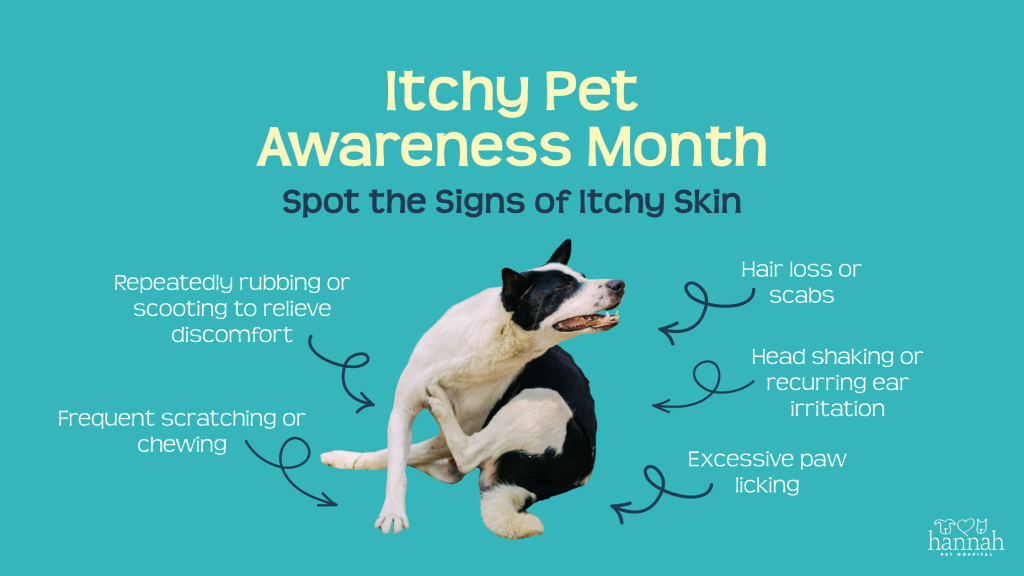
VCA Animal Hospitals explains that signs of itchiness can include scratching, biting, chewing, rubbing, frequent licking, recurring ear problems, hair loss, sores, and changes in the skin.
Keep an eye out for:
- Frequent or persistent scratching
- Licking or chewing the paws
- Biting or chewing at the skin
- Rubbing the face or body against furniture or carpeting
- Red, irritated, flaky, or inflamed skin
- Hair loss or thinning fur
- Scabs, sores, or hot spots
- Head shaking or recurring ear irritation
- Changes in skin or coat odor
Cats can sometimes be more subtle. Excessive grooming or licking may be a sign of itchiness, even if you rarely see your cat scratching. You can learn more about itching in cats from the Merck Veterinary Manual.
1. Environmental Allergies
Just like people, Pets can be sensitive to things in their environment. Pollen, grass, mold, dust, and dust mites are among the environmental allergens that can contribute to itchy skin.
The Merck Veterinary Manual notes that Pets with seasonal itching may be reacting to seasonal allergens, while year-round symptoms may be associated with allergens present throughout the year.
Environmental allergies can sometimes affect particular areas of the body, including the paws, face, ears, and skin. You might notice your dog licking their paws after being outside or see recurring skin or ear irritation.
Because many different conditions can cause similar symptoms, determining whether environmental allergies are responsible often requires a veterinary evaluation.
2. Fleas and Other Parasites
Even if you haven’t spotted a flea on your Pet, parasites shouldn’t automatically be ruled out.
Flea bites can cause irritation on their own, but some Pets are particularly sensitive to flea saliva. This condition is known as flea allergy dermatitis.
According to the Merck Veterinary Manual , flea allergy dermatitis is a hypersensitivity to components of flea saliva and can affect both dogs and cats. Pets may experience significant itching, licking, chewing, hair loss, or irritated skin.
Other parasites, including certain types of mites and lice, can also contribute to itchy skin. Some are too small to see without a microscope, so determining whether parasites are involved may require testing by your veterinary Team.
Keeping up with the parasite prevention recommended for your individual Pet can be an important part of protecting their skin and overall health.
3. Food Allergies or Sensitivities
Food can sometimes play a role in skin problems as well.
Pets can develop reactions to components of their diet, and skin-related symptoms may include persistent itching, paw licking, or recurring skin and ear problems.
However, itchy skin doesn’t automatically mean your Pet has a food allergy. Allergies, parasites, infections, and other skin conditions can look very similar.
VCA Animal Hospitals explains that allergy symptoms can resemble other medical conditions or occur alongside them, which is why veterinary evaluation is important before assuming allergies are responsible.
If a food reaction is suspected, your veterinary Team can help determine the appropriate next steps rather than making sudden or unnecessary changes to your Pet’s diet.
4. Skin and Ear Infections
Sometimes an infection is the primary source of itching. In other cases, an underlying issue causes a Pet to scratch or lick repeatedly, damaging the skin and creating an opportunity for a secondary infection to develop.
Bacterial and yeast infections can make already irritated skin even more uncomfortable. The Merck Veterinary Manual explains that infections can occur alongside other causes of itching and may contribute to ongoing irritation.
Depending on the condition, signs can include itching, redness, hair loss, scaling, odor, or discharge. Recurring ear problems can also accompany allergic skin disease.
If your Pet frequently shakes their head, scratches their ears, or experiences repeated ear infections, mention it to your veterinary Team.
5. Contact Irritation
Sometimes the culprit may be something your Pet’s skin comes into direct contact with.
Certain shampoos, cleaning products, fabrics, plants, or other substances may irritate sensitive skin.
VCA Animal Hospitals discusses contact allergies and other allergic reactions that can contribute to skin problems in dogs.
If you notice that your Pet’s itching began after introducing a new grooming product, household cleaner, bedding material, or another product, make a note of it and let your veterinary Team know.
When Is It Time to See the Vet?
A little occasional scratching isn’t necessarily a reason for concern. Persistent or worsening itching, however, deserves attention.
Consider contacting your veterinary Team if your Pet:
- Scratches, licks, or chews frequently
- Develops red or inflamed skin
- Has bald patches or noticeable hair loss
- Develops sores, scabs, or bleeding from scratching
- Has an unusual skin or ear odor
- Experiences recurring ear problems
- Seems uncomfortable or has difficulty settling down because of the itching
- Has symptoms that continue to return
Getting to the root of itchy skin isn’t always as simple as it may seem. Your veterinarian may need to consider your Pet’s medical history, symptoms, lifestyle, parasite prevention, diet, and other factors before determining what is causing the problem.
Helping Your Pet Find Relief
When your Pet can’t stop scratching, it’s tempting to immediately try a new shampoo, change their food, or look for an at-home solution. But because so many different conditions can cause similar symptoms, what works for one itchy Pet may not be appropriate for another.
Pay attention to when and where your Pet is itching, any changes you’ve noticed in their skin or coat, and whether the problem seems seasonal or happens throughout the year. These details can be helpful when discussing your concerns with your veterinary Team.
Most importantly, don’t let persistent itching become your Pet’s new normal. Finding the source of the itch is the first step toward helping them feel comfortable in their skin again.
At Hannah, our veterinary Team is here to help Members understand changes in their Pet’s health and determine the next steps for their care. If your Pet has been scratching, licking, or chewing more than usual, reach out to your Hannah Team.